How Much Does an Estate Cleanout Cost? A Complete Pricing Guide
August 20, 2026
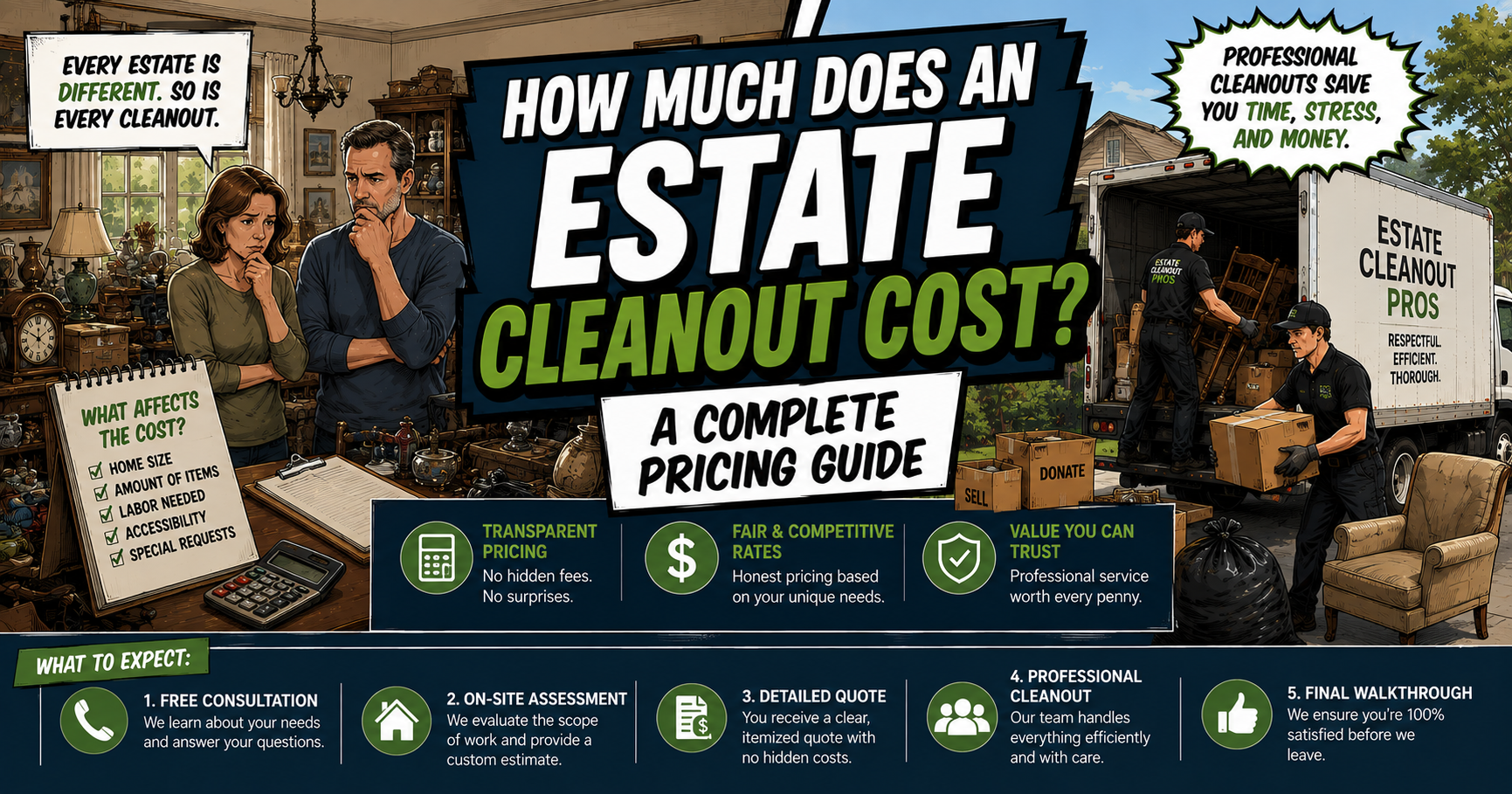
When you're faced with clearing out an entire home, one of the first questions that usually comes to mind is:
How much does an estate cleanout cost?
Unfortunately, there isn't a simple one-size-fits-all answer.
Estate cleanout pricing can vary significantly depending on the size of the property, the amount of material that needs to be removed, accessibility, labor requirements, disposal costs, and the overall condition of the home.
A lightly furnished two-bedroom home may require a relatively straightforward cleanout, while a large property filled with decades of accumulated belongings could require multiple trucks, several workers, and days of labor.
Understanding what goes into the price of an estate cleanout can help you know what to expect, compare estimates, and avoid unexpected charges.
This guide explains the major factors that affect estate cleanout costs, how professional companies typically determine pricing, and how you may be able to reduce the overall expense.
What Is Included in an Estate Cleanout?
Before discussing pricing, it's important to understand what an estate cleanout actually involves.
A professional estate cleanout is much more than simply loading unwanted items into a truck.
Depending on the company and the property, services may include:
Sorting household belongings
Identifying items to keep
Separating potentially valuable items
Removing furniture
Removing appliances
Clearing closets and cabinets
Emptying garages and storage areas
Coordinating donations
Separating recyclable materials
Hauling away unwanted items
Properly disposing of debris
Sweeping or vacuuming after removal
Some companies can also coordinate estate sales or other liquidation options when the property contains items with significant resale value.
The amount of work involved in completing these tasks is one reason estate cleanout prices can vary considerably from one property to another.
What Determines the Cost of an Estate Cleanout?
Professional cleanout companies generally consider several factors when preparing an estimate.
1. Volume of Items
The amount of material that needs to be removed is usually one of the biggest factors affecting price.
A large home doesn't necessarily mean an expensive cleanout.
For example, a 3,000-square-foot house containing only a few pieces of furniture may be easier to clean out than a heavily packed 1,200-square-foot home.
Companies typically evaluate how much truck or trailer space the contents will require.
More material means:
More loading time
More transportation
More disposal costs
More labor
For this reason, volume is often more important than the square footage of the property.
2. Amount of Labor Required
Estate cleanouts are extremely labor intensive.
Furniture must be carried out, boxes loaded, closets emptied, and thousands of individual household items handled.
Some properties can be completed with a small crew in several hours.
Others may require a larger crew working for multiple days.
Labor requirements may increase when the property contains:
Extremely heavy furniture
Large appliances
Safes
Exercise equipment
Large quantities of books
Packed garages
Attics filled with belongings
Basements with difficult access
The more manpower and time required, the more the cleanout will generally cost.
3. Accessibility
How easily workers can access the property can significantly affect pricing.
A single-story home with a large driveway is usually easier to clean out than a third-floor apartment with no elevator.
Accessibility challenges may include:
Multiple flights of stairs
Narrow hallways
Limited parking
Long distances between the home and truck
Small elevators
Steep driveways
Remote storage buildings
Difficult attic access
Basement stairways
These conditions increase the amount of time and effort required to remove items safely.
4. Disposal Fees
Not everything removed from an estate can be donated or recycled.
Some materials must be transported to approved disposal facilities.
Professional cleanout companies may pay fees based on:
Weight
Volume
Type of material
Disposal facility
Certain items may also require special handling.
Examples can include:
Mattresses
Tires
Refrigerators
Televisions
Paint
Chemicals
Batteries
Electronics
Local disposal regulations vary, which can affect the cost of properly handling these materials.
5. Condition of the Property
A normally maintained home is very different from a property containing severe clutter, animal waste, spoiled food, mold, pests, or other hazardous conditions.
Properties requiring additional protective equipment or specialized handling generally cost more to clean.
Examples include homes affected by:
Hoarding
Rodent infestations
Insect infestations
Mold
Animal waste
Water damage
Excessive dust
Strong odors
These situations may require additional labor, equipment, and safety precautions.
6. Heavy and Oversized Items
Some household items require extra workers or specialized equipment.
Examples include:
Pianos
Gun safes
Pool tables
Large appliances
Oversized furniture
Commercial equipment
Large toolboxes
Removing these items safely may require dollies, lifting equipment, additional workers, or special transportation.
If a property contains unusually heavy items, mention them when requesting an estimate.
7. Garages, Sheds, Attics, and Outbuildings
When families think about cleaning out a home, they often focus on the living areas.
But some of the biggest cleanout projects are hiding in the garage.
Garages frequently contain decades of accumulated:
Tools
Automotive parts
Paint
Chemicals
Lumber
Lawn equipment
Hardware
Boxes
Sporting goods
Storage sheds, barns, workshops, and detached garages can add significant volume to a project.
Make sure these areas are included when receiving an estimate.
Can Valuable Items Reduce the Cost of a Cleanout?
Potentially.
One of the biggest advantages of working with a company experienced in both estate liquidation and cleanouts is the ability to recognize items that may have resale value.
Before simply throwing everything away, the property should be evaluated for potentially valuable belongings.
These might include:
Antiques
Jewelry
Coins
Vintage furniture
Collectibles
Tools
Artwork
Vintage electronics
Musical instruments
Military memorabilia
Designer goods
Sterling silver
Sports memorabilia
Depending on the company and the situation, valuable items may be sold separately or through an estate sale before the cleanout begins.
Revenue generated from those items can sometimes offset part—or even a significant portion—of the cleanout expense.
Don't Assume Old Means Worthless
One of the biggest mistakes families make during estate cleanouts is assuming older belongings are junk.
Today's resale market has created strong demand for many items that were once considered outdated.
Examples can include:
Mid-century furniture
Vintage stereo equipment
Old advertising
Vintage clothing
Certain toys
Records
Tools
Cameras
Video games
Collectible glassware
Before filling a dumpster, it's worth having someone knowledgeable evaluate the contents.
Something sitting untouched in a garage for 30 years may be exactly what a collector is looking for.
Estate Sale Before Cleanout: Is It Worth It?
For some properties, absolutely.
If the home contains enough desirable merchandise, an estate sale can generate income before the final cleanout.
A typical process might look like this:
Step 1: Evaluate the Contents
An estate professional determines whether enough valuable merchandise exists to justify a sale.
Step 2: Remove Personal Keepsakes
Family members remove anything they want to keep.
Step 3: Conduct the Estate Sale
Furniture, collectibles, household goods, tools, and other merchandise are offered for sale.
Step 4: Clean Out What Remains
After the sale, remaining unwanted items are donated, recycled, or disposed of.
This approach can significantly reduce the volume that needs to be hauled away.
How Can You Reduce Estate Cleanout Costs?
There are several ways families may be able to lower the cost of a cleanout.
Remove Items You're Keeping First
Clearly separate anything that will remain with the family.
This prevents confusion and makes the cleanout process more efficient.
Identify Donations
Usable furniture, clothing, kitchenware, and household goods may be accepted by charitable organizations.
Reducing the amount sent to disposal facilities can sometimes lower costs.
Sell Valuable Items
If the estate contains significant resale merchandise, consider an estate sale or other liquidation method before scheduling the final cleanout.
Make the Property Accessible
If possible, provide easy access to:
Driveways
Garages
Gates
Storage areas
Efficient access helps crews work faster.
Get a Professional Evaluation
Before spending weeks trying to handle everything yourself, have a professional look at the property.
You may discover that hiring a crew is more affordable than expected.
Why the Cheapest Estimate Isn't Always the Best
When comparing cleanout companies, price matters—but it shouldn't be the only consideration.
An unusually low estimate may not include:
Disposal fees
Labor
Heavy-item charges
Cleanup
Donation transportation
Make sure you understand exactly what's included.
A reputable company should clearly explain:
What will be removed
What services are included
Whether disposal fees are included
Whether additional charges are possible
Transparent pricing helps prevent unpleasant surprises.
Estate Cleanout vs. Junk Removal
These services overlap, but they're not always the same.
Traditional junk removal generally focuses on one thing:
Removing unwanted material.
Estate cleanouts often require a more careful approach.
An experienced estate cleanout company understands that a home may contain:
Valuable property
Sentimental belongings
Important documents
Family photographs
Collectibles
Items suitable for donation
Instead of treating everything as trash, the contents may need to be evaluated and sorted first.
That distinction can be extremely important when handling a loved one's estate.
What About DIY Estate Cleanouts?
Cleaning out a property yourself may seem like the cheapest option.
Sometimes it is.
But families frequently underestimate the true cost.
Consider expenses such as:
Dumpster rental
Truck rental
Fuel
Disposal fees
Equipment rental
Cleaning supplies
Protective equipment
Then consider the amount of time involved.
A professional crew may complete in one or two days what takes a family several weekends.
There's also the physical strain of repeatedly moving furniture, appliances, boxes, and other heavy objects.
DIY can make sense for smaller properties, but large estate cleanouts often become overwhelming quickly.
How Long Does an Estate Cleanout Take?
The timeline varies based on the size and condition of the property.
A small, lightly furnished home might be completed within several hours.
A typical household may take one or two days.
Larger or heavily cluttered properties may require several days or longer.
Factors affecting the timeline include:
Volume
Number of workers
Accessibility
Heavy items
Sorting requirements
Disposal logistics
A professional walkthrough is usually the best way to estimate how long a particular project will take.
What Should You Do Before Getting an Estimate?
You don't necessarily need to clean or organize the property beforehand.
In fact, sometimes it's better not to.
Before requesting an estimate:
Identify Anything You're Keeping
Mark or remove important belongings.
Locate Important Documents
Secure legal and financial paperwork whenever possible.
Don't Throw Away Potentially Valuable Items
If you're unsure whether something has value, leave it for evaluation.
Show the Entire Property
Make sure the estimator sees:
Closets
Garage
Basement
Attic
Sheds
Storage areas
The more accurate the walkthrough, the more accurate the estimate can be.
What Should Be Included in an Estate Cleanout Estimate?
A professional estimate should clearly explain the scope of work.
Ask whether the price includes:
Labor
Loading
Transportation
Disposal
Furniture removal
Appliance removal
Donation handling
Basic cleanup
Also ask whether any circumstances could result in additional charges.
Clear communication before the project begins helps prevent misunderstandings.
Frequently Asked Questions About Estate Cleanout Costs
Is an estate cleanout charged by the hour?
Some companies use hourly pricing, while others price according to the volume of material, labor requirements, disposal costs, or the entire project.
Project-based estimates are common because they allow customers to understand the expected total cost before work begins.
Do I need to organize everything before the cleanout company arrives?
Usually not.
Professional crews are accustomed to sorting and removing household contents. However, you should clearly identify anything you want to keep.
Can donations reduce the cost?
Sometimes. Donating usable items may reduce the amount of material requiring disposal, although transportation and labor are still required.
Can an estate sale pay for the cleanout?
In some situations, proceeds from an estate sale can offset some or all of the cleanout expense.
Whether this is possible depends entirely on the quantity, condition, and value of the merchandise.
How do I know whether items are valuable?
If you're unsure, don't throw them away.
An experienced estate professional can help identify items that may deserve additional research or appraisal.
How much does a hoarder house cleanout cost?
Hoarder cleanouts are typically more labor intensive than standard estate cleanouts. Pricing depends on the amount of material, property condition, safety concerns, accessibility, and disposal requirements.
An on-site evaluation is usually necessary to provide an accurate estimate.
Do cleanout companies remove everything?
Most full-service estate cleanout companies can remove nearly all unwanted household contents, although hazardous materials and certain regulated items may require specialized disposal.
Always ask about specific items during your consultation.
The Best Way to Find Out What Your Estate Cleanout Will Cost
Because every property is different, the most reliable way to determine the cost of an estate cleanout is through an on-site evaluation.
Photos can sometimes provide a rough idea, but walking through the property allows the company to evaluate:
Overall volume
Furniture
Appliances
Accessibility
Garages and storage areas
Heavy items
Disposal requirements
Potentially valuable belongings
This information makes it possible to provide a much more accurate estimate.
Final Thoughts
So, how much does an estate cleanout cost?
The answer depends largely on how much needs to be removed, how difficult it is to remove, and what needs to happen to those items afterward.
A lightly furnished property may be relatively simple, while a home containing decades of accumulated belongings can require substantial labor and disposal resources.
The important thing is to look beyond the number of rooms or square footage.
The true cost of an estate cleanout is determined by the actual work involved.
It's also important not to assume that everything needs to be thrown away. Valuable items can sometimes be sold, usable belongings can often be donated, and recyclable materials can be diverted from landfills.
Working with an experienced estate cleanout company can help you determine the most efficient approach while protecting valuable belongings and reducing unnecessary disposal.