How Probate Affects Estate Cleanouts: A Complete Guide for Families
August 10, 2026
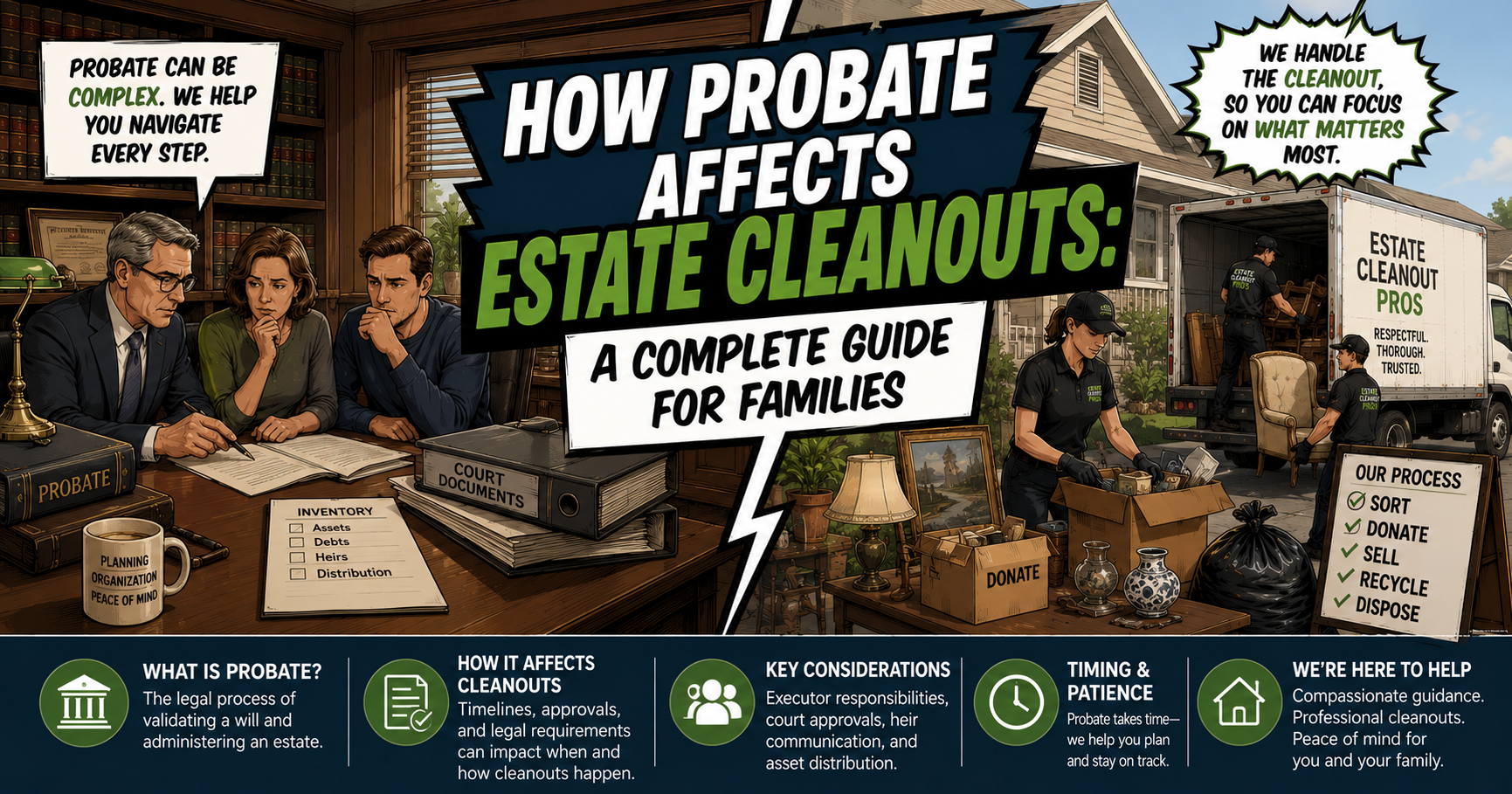
Losing a loved one is one of life's most difficult experiences. In addition to the emotional toll, families are often faced with the responsibility of settling the deceased's affairs, including managing their home and personal belongings. One of the biggest questions people ask is:
"Can we clean out the house before probate is complete?"
The answer isn't always straightforward.
Probate can significantly affect when and how an estate cleanout takes place. Depending on the circumstances, removing property too early can create legal complications, family disputes, or even personal liability for the executor.
Understanding how probate works—and how it impacts estate cleanouts—can help families avoid costly mistakes while keeping the process moving forward.
In this guide, we'll explain what probate is, how it affects cleaning out a home, when it's safe to begin, and how professional estate cleanout companies can work alongside executors, attorneys, and real estate professionals to make the process as smooth as possible.
What Is Probate?
Probate is the legal process used to settle a person's estate after they pass away.
During probate, the court oversees the administration of the deceased person's assets and ensures that debts, taxes, and legal obligations are addressed before property is distributed to heirs or beneficiaries.
Depending on the state and the complexity of the estate, probate can last anywhere from a few months to more than a year.
While every situation is different, probate generally involves:
Validating the will (if one exists)
Appointing an executor or personal representative
Identifying estate assets
Notifying creditors
Paying debts and taxes
Distributing remaining assets to beneficiaries
Until this process begins, ownership and authority over estate property may not be as clear as many families assume.
Does Every Estate Go Through Probate?
No.
Some assets transfer automatically without probate.
Examples may include:
Jointly owned property with rights of survivorship
Certain trust assets
Payable-on-death bank accounts
Transfer-on-death investment accounts
Life insurance with named beneficiaries
However, homes owned solely by the deceased often require probate before they can be sold or transferred, depending on state law.
Because probate laws vary, it's always wise to consult an attorney if you're unsure how your specific situation is handled.
Who Has the Authority to Clean Out the House?
This is one of the most misunderstood parts of the probate process.
After someone passes away, family members do not automatically have the legal authority to remove property from the home simply because they are relatives.
In most cases, that responsibility belongs to the executor (named in the will) or the personal representative appointed by the probate court.
The executor has a legal duty to protect the estate and act in the best interests of all beneficiaries.
That includes safeguarding personal property until it can be properly inventoried, valued, and distributed.
Why Cleaning Out a Home Too Soon Can Cause Problems
Families often want to begin cleaning immediately, especially if the home needs repairs or is scheduled to be sold.
While understandable, removing property before proper documentation can create several issues.
Missing Assets
Without an inventory, it becomes difficult to determine what belonged to the estate.
If valuables disappear, disagreements may arise among beneficiaries.
Family Disputes
One sibling may believe another removed valuable items before everyone had an opportunity to review the estate.
These disagreements can permanently damage family relationships.
Executor Liability
Executors have a fiduciary responsibility to manage estate assets responsibly.
If property is improperly distributed or removed too early, the executor could face legal challenges from beneficiaries or creditors.
The Importance of Creating an Inventory
Before removing large amounts of property, it's generally a good idea to document what is inside the home.
This doesn't always require a detailed appraisal of every item, but creating a basic inventory helps establish transparency.
Many executors choose to:
Photograph each room
Record videos while walking through the home
List major furniture and valuables
Identify antiques and collectibles
Locate financial documents
Secure jewelry and important paperwork
Having clear documentation helps reduce misunderstandings later.
Identifying Valuable Property
One of the biggest mistakes families make is assuming certain belongings have little value.
Professional estate sale companies frequently discover valuable items hidden among everyday household possessions.
Examples include:
Rare coins
Vintage toys
Jewelry
Fine artwork
Firearms (where legally permitted)
Antique furniture
Military memorabilia
Collectible sports cards
Vintage electronics
Designer handbags
Sterling silver
Gold bullion
Before disposing of items, it's worth having experienced professionals evaluate anything that may have resale value.
When Is It Appropriate to Begin an Estate Cleanout?
Every estate is unique, but many families begin the cleanout process after:
The executor has been officially appointed.
Important legal documents have been secured.
Valuable items have been identified.
Family members have agreed on sentimental belongings.
The probate attorney has approved moving forward.
Waiting until these steps are complete helps reduce legal risks and family disagreements.
How Estate Cleanout Companies Help During Probate
Professional estate cleanout companies understand the challenges that probate creates.
Rather than simply hauling everything away, experienced companies work closely with executors and families throughout the process.
Their services often include:
Sorting belongings
Identifying potentially valuable items
Donation coordination
Junk removal
Recycling
Furniture removal
Basic property cleanup
Some companies also coordinate with estate sale professionals if valuable items are discovered.
Estate Sale or Estate Cleanout?
Many probate homes contain a mixture of valuable and everyday household items.
The best solution often depends on what's inside.
An Estate Sale May Be the Better Choice If:
The home contains antiques.
There are quality furniture pieces.
Collectibles are present.
Jewelry or artwork has resale value.
The family wants to maximize financial return.
An Estate Cleanout May Be Better If:
The home needs to be emptied quickly.
Most belongings have little resale value.
The property is heavily cluttered.
The home is being prepared for immediate sale.
In many situations, families choose to hold an estate sale first, followed by a cleanout to remove everything that remains.
Preparing the Home for Sale
One reason estate cleanouts happen during probate is to prepare the property for listing.
Real estate professionals consistently recommend removing excess clutter before putting a home on the market.
Benefits include:
Better listing photos
More appealing showings
Easier inspections
Faster closings
Higher buyer interest
An empty, clean home allows buyers to focus on the property itself rather than the previous owner's belongings.
Don't Forget Important Documents
One of the most valuable things found during estate cleanouts isn't furniture—it's paperwork.
Families frequently discover:
Wills
Trust documents
Property deeds
Stock certificates
Tax records
Insurance policies
Military discharge papers
Vehicle titles
Birth certificates
Marriage licenses
Safe deposit box keys
Professional cleanout companies know to watch for these items rather than accidentally disposing of them.
Donation and Recycling Options
Not everything belongs in a landfill.
Many estate cleanout companies make every effort to donate usable items whenever possible.
Common donations include:
Clothing
Kitchenware
Furniture
Books
Medical equipment
Linens
Household goods
Recycling is also encouraged for:
Electronics
Scrap metal
Cardboard
Appliances
Certain plastics
Responsible disposal helps reduce environmental impact while supporting local charities.
Working With Multiple Heirs
Probate often involves several beneficiaries.
Good communication helps prevent misunderstandings.
Before beginning the cleanout, families should discuss:
Sentimental items
Distribution of personal belongings
Deadlines for removing keepsakes
Items that will be sold
Donation preferences
Establishing expectations early makes the process much smoother.
Choosing the Right Estate Cleanout Company
Not every junk removal company has experience working with probate estates.
Look for a company that offers:
Estate cleanouts
Estate sale coordination
Licensed and insured crews
Donation services
Transparent pricing
Excellent reviews
Experience working with executors and attorneys
An experienced company understands that probate cleanouts require organization, patience, and attention to detail.
Questions to Ask Before Hiring
Before scheduling a cleanout, consider asking:
Have you worked on probate properties before?
Are you licensed and insured?
Can you identify potentially valuable items?
Do you coordinate estate sales?
What happens to donated belongings?
How quickly can the cleanout be completed?
Do you provide a broom-clean finish?
The answers will help you compare providers and choose the one that's right for your situation.
Frequently Asked Questions
Can you clean out a house before probate is finished?
In some situations, yes—but only if the executor or personal representative has the legal authority to do so and any applicable legal requirements are met. Because probate laws vary by state, it's important to consult with the estate's attorney before removing significant property.
Can family members take belongings before probate?
Family members should avoid removing estate property without permission from the executor or personal representative. Doing so can create disputes among beneficiaries and may complicate the probate process.
Should valuable items be appraised?
If the estate contains antiques, collectibles, jewelry, artwork, or other high-value property, obtaining a professional appraisal can help ensure those assets are handled appropriately.
How long does an estate cleanout take?
Most standard cleanouts take one to three days. Larger homes or heavily cluttered properties may require additional time.
What happens to items nobody wants?
Many cleanout companies donate usable items, recycle materials whenever possible, and responsibly dispose of anything that cannot be reused.
Why Hiring a Professional Makes the Process Easier
Managing an estate during probate is already a significant responsibility. Between legal paperwork, financial obligations, and family communication, adding the task of cleaning out an entire home can quickly become overwhelming.
A professional estate cleanout company takes much of that burden off your shoulders by handling the physical work, organizing belongings, identifying potentially valuable items, coordinating donations, and preparing the property for its next chapter.
Instead of spending weeks sorting through decades of accumulated possessions, families can focus on what truly matters while experienced professionals handle the logistics.
Final Thoughts
Probate and estate cleanouts often go hand in hand, but timing and organization are essential. Understanding the executor's responsibilities, documenting the home's contents, preserving valuable items, and working within the legal requirements of the estate can help avoid unnecessary stress and conflict.
Whether you're preparing a home for sale, managing an inherited property, or helping settle the estate of a loved one, partnering with an experienced estate cleanout company can simplify the process from start to finish.
With the right team on your side, you can move through probate with confidence, knowing the property is being handled professionally, respectfully, and efficiently.