Inherited a House Full of Stuff? Here’s What to Do First
September 7, 2026
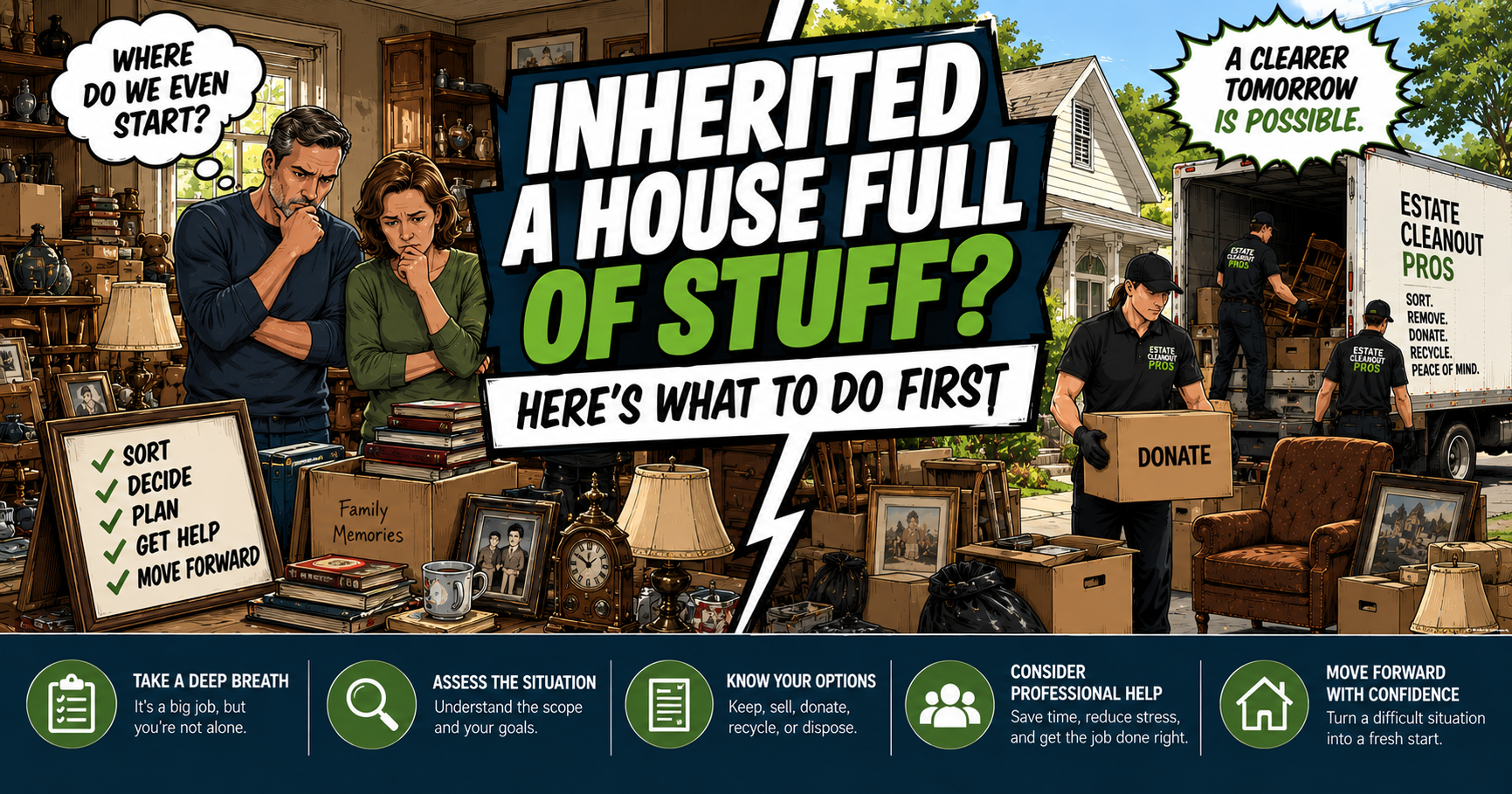
nheriting a house can be overwhelming.
In many cases, you aren't simply inheriting a piece of real estate. You're also inheriting everything inside it—furniture, clothing, paperwork, photographs, tools, collectibles, kitchenware, boxes, decorations, and decades of personal belongings.
Suddenly, you're faced with a house full of stuff and a long list of questions:
What should we keep? What should we sell? What can be donated? Is anything valuable? Can we start cleaning out the house immediately? What happens if the property is going through probate?
It can be tempting to start filling trash bags and dumpsters just to make visible progress.
That's often the wrong place to start.
A thoughtful approach can help protect valuable property, preserve important family belongings, reduce conflict among heirs, and potentially save—or even recover—a significant amount of money.
If you've inherited a house full of belongings and don't know where to begin, here's a step-by-step guide to making the process manageable.
First, Don’t Panic
Walking into a fully furnished home after inheriting it can make the project seem impossible.
You may be looking at:
Packed closets
Full kitchen cabinets
Furniture in every room
Boxes in the garage
Holiday decorations
Tools
Clothing
Books
Paperwork
Storage containers
Decades of miscellaneous belongings
Don't think about the entire house at once.
You don't need to decide what happens to every object immediately.
The first goal is simply to protect the property and identify anything that shouldn't be lost.
Once that's done, the rest of the cleanout can happen in an organized way.
Step 1: Make Sure You Have Authority to Handle the Property
Before removing or selling significant amounts of property, determine who has legal authority to make decisions regarding the estate.
If the home is going through probate, the executor or court-appointed personal representative may be responsible for managing the property.
That can include:
Protecting estate assets
Creating inventories
Paying estate obligations
Selling property
Distributing belongings to beneficiaries
Family members shouldn't automatically assume they're free to take belongings simply because they're related to the deceased.
If you're unsure about your authority, speak with the estate's attorney before selling, donating, or disposing of significant property.
Taking this precaution early can prevent major problems later.
Step 2: Secure the Property
If the home is vacant, securing it should be one of your first priorities.
Check:
Exterior doors
Windows
Garage doors
Gates
Sheds
Detached garages
You may also want to determine who currently has keys.
Over the years, keys may have been given to:
Family members
Neighbors
Contractors
Caregivers
Cleaning services
Friends
Changing or rekeying exterior locks may be appropriate, particularly if you don't know how many keys are in circulation.
You should also check that essential utilities remain operational if they're needed to protect the property.
A vacant home can quickly develop problems if plumbing leaks, heating or cooling systems fail, or other maintenance issues go unnoticed.
Step 3: Find Important Documents Before Cleaning
One of the biggest mistakes families make is throwing away paperwork too quickly.
A home may contain thousands of pieces of paper, and important documents can easily be mixed in with ordinary mail.
Before disposing of paperwork, look for:
Wills
Trust documents
Property deeds
Vehicle titles
Tax records
Insurance policies
Bank statements
Investment records
Stock certificates
Birth certificates
Marriage certificates
Military records
Business records
Safe deposit box information
Also watch for passwords, account information, contact lists, keys, and handwritten notes identifying important assets.
A plain envelope tucked inside a desk drawer can contain something extremely important.
Take your time with paperwork.
Step 4: Look for Cash and Valuables
People store valuables in unusual places.
This is especially true for older generations who may have preferred keeping cash or important belongings at home.
Before throwing away boxes, containers, clothing, books, or furniture, check them carefully.
Cash and valuables have been found inside:
Books
Envelopes
Coat pockets
Shoes
Freezers
Mattresses
Dresser drawers
Toolboxes
Coffee cans
Filing cabinets
Old purses
Boxes
Desk drawers
You should also search for:
Jewelry
Coins
Precious metals
Watches
Collectibles
Firearms
Important keys
Never assume that something is empty without checking it.
Step 5: Set Aside Family Photographs and Sentimental Items
Financial value isn't the only kind of value that matters.
Family photographs, letters, military medals, wedding keepsakes, childhood belongings, and other personal items may have almost no resale value but tremendous sentimental importance.
Create a designated area for these belongings.
Items might include:
Photographs
Photo albums
Letters
Family Bibles
Military records
Medals
Genealogy documents
Home movies
Old photographs
Children's artwork
Family recipes
Personal journals
These are exactly the types of belongings families often regret losing after a cleanout.
When in doubt, set something aside and make the decision later.
Step 6: Give Family Members a Chance to Identify What They Want
When multiple heirs or family members are involved, communication is extremely important.
Don't let everyone independently enter the home and start taking things.
Even when everyone gets along, this can quickly create misunderstandings.
Instead, establish a process.
Family members can identify:
Sentimental belongings
Furniture
Artwork
Photographs
Family heirlooms
Personal collections
If multiple people want the same item, decide how those situations will be handled before distribution begins.
The financial value of the object may be small, but emotional value can create significant disagreements.
A clear process helps prevent unnecessary conflict.
Step 7: Don’t Assume Everything Old Is Junk
This is extremely important.
The resale market has changed dramatically.
Items that families once considered outdated can now be highly collectible.
Examples include:
Vintage clothing
Mid-century modern furniture
Old stereo equipment
Vinyl records
Vintage toys
Advertising signs
Video games
Cameras
Watches
Tools
Sports memorabilia
Military memorabilia
Designer clothing
Certain kitchenware
Something that has been sitting untouched in a basement for 40 years may have more value today than it did when it was purchased.
Before renting a dumpster, consider having the home's contents evaluated.
Step 8: Identify Items That May Need Professional Appraisal
Some property deserves more than a quick online search.
Potentially high-value items may require evaluation by a qualified specialist.
These could include:
Fine jewelry
Rare coins
Fine art
Antique furniture
Rare books
Valuable watches
Significant collections
Precious metals
Certain historical items
Professional appraisals may also be required for estate or probate purposes in some situations.
If you aren't sure whether something is valuable, don't sell it immediately.
Set it aside until you can obtain more information.
Step 9: Decide Whether an Estate Sale Makes Sense
Once family members have removed the belongings they want to keep, evaluate what's left.
If the home contains enough desirable merchandise, an estate sale may be an excellent option.
Estate sales can help liquidate:
Furniture
Tools
Collectibles
Kitchenware
Artwork
Jewelry
Décor
Electronics
Outdoor equipment
Household goods
A professional estate sale company can evaluate whether there's enough merchandise to justify holding a sale.
If there is, the sale can generate money for the estate while significantly reducing the amount of material remaining in the home.
Estate Sale vs. Estate Cleanout
These services are related, but they have different goals.
An estate sale focuses on selling belongings and recovering value.
An estate cleanout focuses on emptying the property.
Many inherited homes benefit from both.
The process might look like this:
Family members remove keepsakes.
Valuable items are identified.
An estate sale is held.
Remaining usable items are donated.
Remaining unwanted contents are removed.
The property is cleaned and prepared for sale.
This can be much more efficient than immediately throwing everything away.
Step 10: Determine What Can Be Donated
After valuable and sentimental items have been removed, there may still be a large amount of perfectly usable property.
Donation can give those belongings a second life.
Common donation items include:
Clothing
Furniture
Kitchenware
Books
Linens
Household décor
Small appliances
Office supplies
Sporting goods
Donation requirements vary by organization, and not every charity accepts every type of item.
Furniture, mattresses, electronics, and large appliances can be particularly difficult depending on condition and available organizations.
A professional estate cleanout company may be able to help coordinate donations as part of the project.
Step 11: Recycle What You Can
Some belongings may not be appropriate for donation but can still be recycled.
Depending on available recycling facilities, this can include:
Electronics
Scrap metal
Cardboard
Appliances
Batteries
Certain plastics
Separating recyclable materials can reduce the amount of waste sent to landfills.
Step 12: Dispose of What Truly Has No Remaining Use
Eventually, you'll reach the items that can't realistically be kept, sold, donated, or recycled.
These may include:
Broken furniture
Damaged household goods
Expired food
Heavily stained items
Broken plastic
Unusable mattresses
General household trash
Damaged carpeting
Miscellaneous debris
At this point, disposal is appropriate.
The key is that disposal should generally be one of the last steps, not the first.
Be Careful With Hazardous Materials
Garages, basements, workshops, and sheds frequently contain materials that shouldn't be placed in ordinary trash.
Examples may include:
Paint
Automotive fluids
Chemicals
Pesticides
Propane cylinders
Batteries
Certain cleaning products
These materials may require specialized disposal according to applicable regulations.
A professional cleanout company can help identify items requiring special handling.
What About the Garage?
Don't underestimate the garage.
In many inherited homes, the garage is one of the most valuable areas of the property.
It may contain:
Power tools
Hand tools
Automotive equipment
Lawn equipment
Fishing equipment
Sporting goods
Vintage signs
Toolboxes
Car parts
Shop equipment
Professional-quality tools in particular can have substantial resale value.
Before disposing of garage contents, have them evaluated.
What About Storage Units?
Don't forget about property located away from the house.
Look for evidence of:
Storage units
Safe deposit boxes
Detached garages
Workshops
Storage sheds
Rental properties
Bills, keys, bank statements, emails, or paperwork may reveal additional property that needs to be included in the estate.
Should You Clean Out the House Yourself?
For a lightly furnished home, handling the cleanout yourself may be practical.
For a fully furnished home containing decades of belongings, the workload can become enormous.
Consider everything involved:
Sorting
Packing
Carrying furniture
Renting trucks
Renting dumpsters
Driving donations
Recycling
Paying disposal fees
Cleaning
A project that initially looks like a weekend job can easily turn into several weeks or months.
Professional cleanout crews already have the labor, equipment, vehicles, and disposal resources needed to complete the job efficiently.
Think About the Value of Your Time
Families often focus exclusively on the cost of hiring a cleanout company.
But your time has value too.
If you spend eight weekends cleaning out a property, that's time you aren't spending with your family, working, or handling other responsibilities associated with the estate.
There may also be ongoing expenses while the property remains unsold, such as:
Insurance
Utilities
Property taxes
Mortgage payments
HOA fees
Lawn maintenance
Repairs
Completing the cleanout faster may allow the property to reach the market sooner.
Preparing the House for Sale
Once the contents have been removed, the home can be evaluated for repairs and cleaning.
This may include:
Deep cleaning
Carpet removal
Painting
Yard cleanup
Minor repairs
Appliance removal
Debris removal
Real estate agents generally prefer properties that are clean, accessible, and easy for buyers to evaluate.
Removing excessive belongings also makes listing photographs and showings much more appealing.
Avoid Making Major Repairs Too Quickly
Before spending thousands of dollars renovating an inherited home, speak with a real estate professional.
Not every improvement produces a good return.
Sometimes a deep cleaning and basic repairs are enough.
In other situations, selling the property as-is may make more financial sense.
The goal should be maximizing the estate's net return—not simply making the house look perfect.
Common Mistakes When Cleaning Out an Inherited House
Several mistakes appear repeatedly.
Throwing Things Away Too Quickly
Potentially valuable or sentimental items can disappear forever.
Letting Everyone Take Whatever They Want
This can create disputes among heirs.
Ignoring Paperwork
Important legal and financial documents may be mixed with ordinary mail.
Assuming Old Items Are Worthless
Vintage and collectible markets can be surprising.
Trying to Do Everything Yourself
Large cleanouts can consume weeks of time.
Hiring Someone Who Treats Everything as Trash
Estate cleanouts require more care than basic junk removal.
When Should You Hire a Professional Estate Cleanout Company?
Professional assistance can be particularly valuable when:
The home is fully furnished.
You live far from the property.
The property needs to be sold quickly.
There's significant clutter.
Family members don't have time to help.
Heavy furniture needs to be removed.
Donations need to be coordinated.
The home contains decades of accumulated belongings.
An experienced estate cleanout company can turn an overwhelming project into a manageable process.
Frequently Asked Questions
What should I do first when I inherit a house full of belongings?
Start by confirming who has authority to manage the estate, securing the property, and locating important documents and valuables. Don't immediately begin throwing things away.
Can I clean out an inherited house before probate is finished?
Possibly, but the person authorizing the cleanout should have appropriate legal authority. If the estate is in probate, consult the executor, personal representative, or estate attorney before removing significant property.
What should I look for before throwing things away?
Pay particular attention to documents, cash, jewelry, photographs, coins, collectibles, tools, vintage items, keys, and sentimental belongings.
Should I have an estate sale?
If the home contains enough desirable merchandise, an estate sale can generate money while reducing the amount of material remaining for the final cleanout.
What happens to everything that doesn't sell?
Remaining items may be donated, recycled, or responsibly disposed of during an estate cleanout.
How long does it take to clean out an inherited house?
A professional crew may complete many standard cleanouts within a few days, while larger or heavily cluttered properties can take longer. A DIY cleanout can take considerably longer depending on the family's availability.
Final Thoughts
Inheriting a house full of stuff can feel overwhelming, especially when you're also grieving or managing the legal and financial responsibilities of an estate.
The most important thing is not to rush the first decisions.
Secure the property. Find important documents. Protect valuables and sentimental belongings. Give family members an organized opportunity to identify what they want. Then evaluate what can be sold, donated, recycled, and ultimately removed.
Don't assume everything is junk simply because it's old.
And don't assume you have to handle the entire project yourself.
A thoughtful estate cleanout can protect valuable belongings, preserve family memories, reduce waste, and get the property ready for its next chapter much faster.